
This bill would have put city budgets on the ballot. The Idaho House said no
AI-generated summary reviewed by our newsroom.
- Idaho House rejected HB 842, blocking a proposal to raise city budget caps.
- Bill would have raised city spending cap to 15% for towns under 30,000.
- Bill would have ended foregone tax banking and allowed voter-led budget rollbacks.
Fast-growing towns in the Treasure Valley and beyond will have to find another way to patch their stretched budgets after a disparate coalition of lawmakers voted down a bill to raise the cap on how much a city can annually increase its spending under state law.
The Idaho House of Representatives shot down House Bill 842 by a vote of 28-41, spiking the amendment to a controversial 2021 tax law that co-sponsor House Speaker Mike Moyle, R-Star, previously said has “hamstrung” small but rapidly expanding towns like his.
Monday’s vote is a rare defeat for the powerful Republican, who introduced the bill as a fix to his own legislation, H.B. 389. Passed amid spiking assessments during the COVID-19 pandemic, that law sought to stem climbing property taxes by capping annual city and county budget increases at 8% year over year.
This year’s bill would nearly double that ceiling, setting a new cap at 15% for cities under 30,000 people.
The change applies to fire and ambulance districts, too. Before the House Revenue and Taxation Committee earlier this month, Moyle said he hoped the amendment would allow a city’s services to scale up in step with its population.
“I think it’s especially important for the fire protection districts, ambulance districts, and those types of services to grow with the cities they’re trying to serve,” co-sponsor Rep. David Cannon, R-Blackfoot, said Monday.
Bill would have put city budgets on the ballot
For cities, H.B. 842 included a few catches.
The proposal would have wound down the practice of banking “foregone” tax revenue — that is, choosing not to take the maximum allowable 3% increase in tax revenue one year to roll it over onto another budget cycle. Cities often use that as a “rainy-day fund,” according to Rep. Rick Cheatum, R-Pocatello, tapping foregone taxes for emergencies or big capital projects.
“It’s a valuable tool,” he said. “If we pass this bill, it’d be gone.”
And, it would have allowed voters to roll back a jurisdiction’s budget the same way they can permanently raise it: at the ballot box. Moyle’s proposal included a sort of anti-levy provision; just as voters can now pass a levy to increase taxes, a supermajority could approve ballot language to “reset” a budget to a lower level, Moyle said.
Cannon called the bill “a lifeline” to small cities while acknowledging the House’s reluctance to raise taxes.
“We were cognizant that we didn’t want to raise taxes,” he said. “We insisted on some provisions that would, long term, amount to property tax relief.”
Idaho representatives reject ‘counterproductive’ fix
Some lawmakers on Monday dismissed the bill as a simple tax increase. But more criticized it from the other side, saying it didn’t do enough to unwind Moyle’s 2021 tax circuit breaker, or rectify its unintended consequences on local governments.
Rep. Mike Pohanka, R-Jerome, read from an email with a city spokesman in his district, who called the legislation “unmanageable, disruptive and counterproductive.”
Rep. Lori McCann, R-Lewiston, also cited correspondence with her constituent cities and counties to rally against the bill.
“They feel that this bill does not fix the problems they’ve had from 389,” said McCann. McCann added that members of the public already have ample opportunity to weigh in on public budgets throughout the year. Adding a ballot provision after the fact would undermine the entire process, she said.
Example: Star grapples with growth
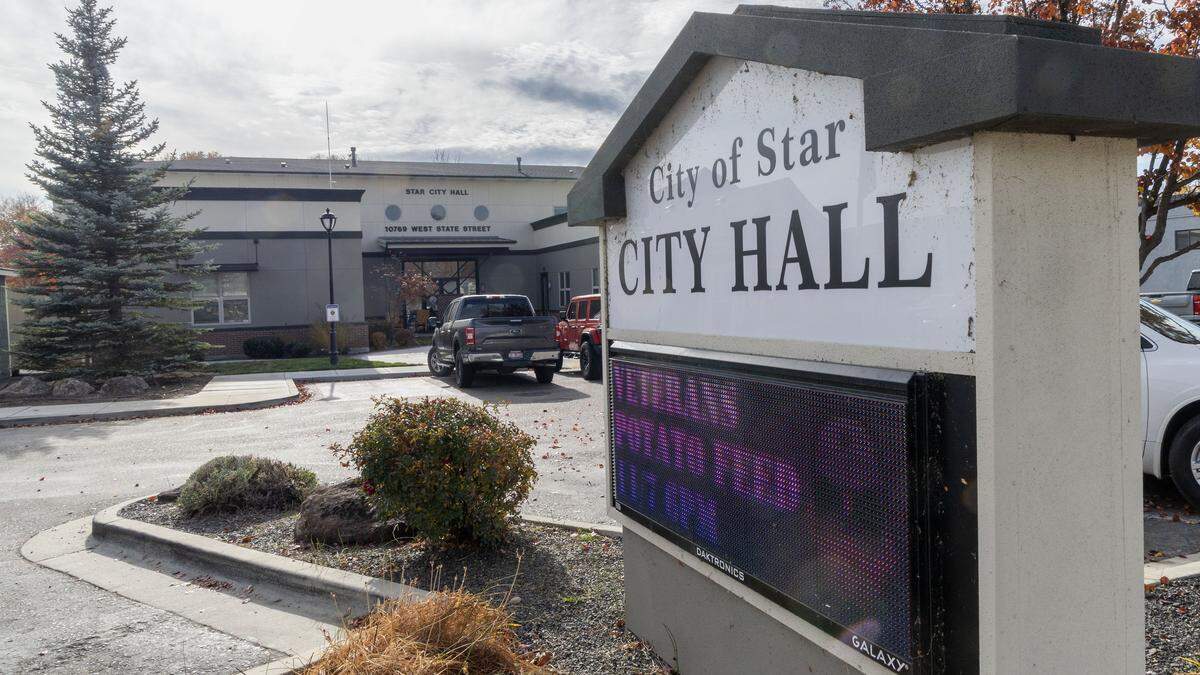
McCann also questioned the bill’s reach, which she implied was aimed at a few small cities in the Treasure Valley.
The poster child for that sort of place— still small, but growing fast — is Star, Moyle’s hometown.
The Boise suburb’s population has grown more than 62% from when H.B. 389 passed, jumping from 13,400 in 2021 to 21,800 in 2025, according to the Community Planning Association of Southwest Idaho. In that time, Star’s property tax collection has risen 48%, creating a “challenging” environment for the city, according to its 2025-26 budget presentation.
All of the city’s $2.2 million in property tax collection goes toward its police contract with the Ada County Sheriff’s Office, Star Mayor Trevor Chadwick wrote in the budget presentation, and it covers only 51% of the full cost; the rest comes from “mitigation fees” charged when a new residential building permit is issued. So far, it’s working, Chadwick said.
“This funding model — unique in Idaho — helps make Star one of the safest cities in the state,” he wrote.
But, “House Bill 389 from 2021 has made the goal of having growth pay for itself more challenging,” the city stated in its budget report.
For McCann, though, Moyle’s proposed cure would be worse than the problems H.B. 389 created.
“I feel like this takes the bottom out of our cities’ ability to budget,” she said.
What is H.B. 389?
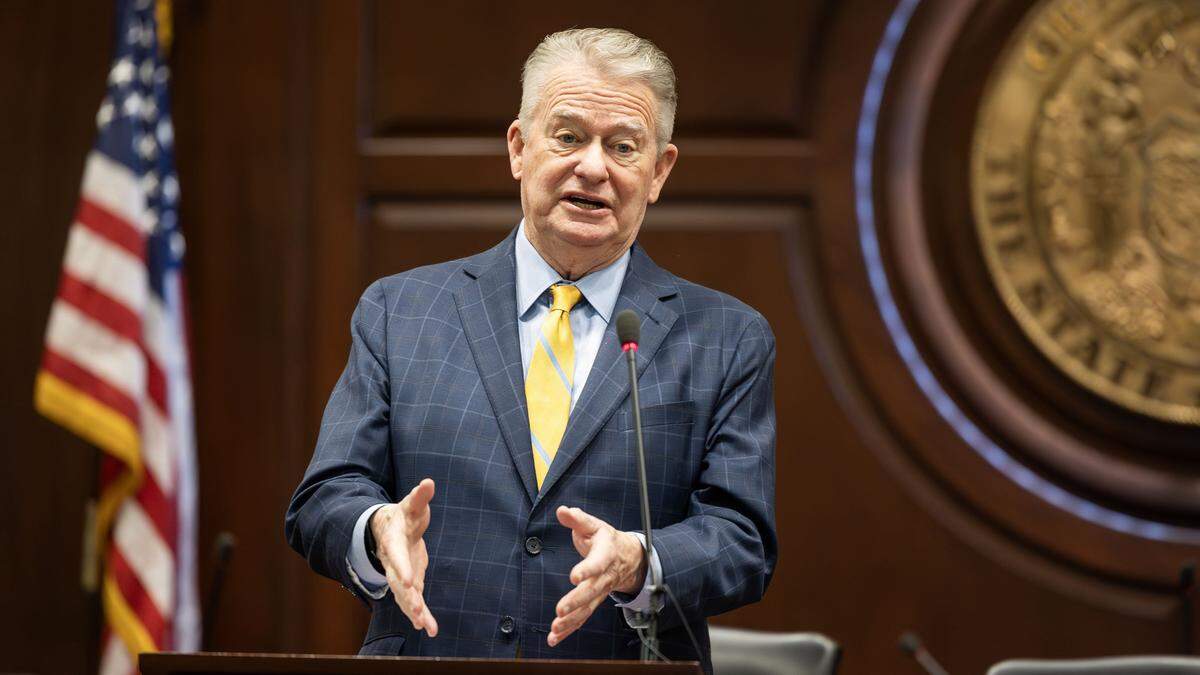
House Bill 389 emerged in the waning days of the 2021 legislative session, already the longest in Idaho history. It was a sweeping tax package, expanding the homeowner’s exemption, strengthening the state’s property tax “circuit breaker” for low-income residents, and curtailing the ways local governments could tax their residents. The law passed quickly, if cautiously.
Gov. Brad Little criticized the bill even as he signed it into law. Little emphasized the need to ease property taxes in a letter accompanying his signature but criticized Moyle’s approach as rushed and overly complex.
“I am signing House Bill 389 because it provides some relief to Idaho taxpayers,” he wrote. “However, I fear the long-term consequences may outweigh this temporary reprieve.”
Almost immediately, cities agreed. Citing “imminent peril,” Caldwell implemented a moratorium on new residential development, the Idaho Statesman reported at the time. Boise officials decried a “false narrative,” while Nampa’s then-mayor raised alarm over the bill’s tight constraints. Years later, Meridian Mayor Robert Simison was still urging a full repeal of the bill.
But Moyle’s bill wouldn’t have helped Caldwell, Nampa or Meridian. They’re too big to see their ceiling raised, even as they lose foregone tax revenue and become subject to budgeting by ballot.
Under Idaho law, a taxing district can increase its budget by 3% per year without asking voters for a levy. But there are ways to push that increase higher if needed. Tapping into the bank of foregone taxes is one. So is taxing new construction. Development grows the tax base, and taxing newly improved land brings in more money to city coffers. As people come in, the money goes back into neighborhoods as police and firemen, snowplows and road crews — the infrastructure and services residents expect government to provide.
In 2021, though, supporters of Moyle’s bill said existing residents were bearing the brunt of growth-driven costs. The law allowed districts to take only 90% of the potential tax revenue from new construction and 80% from annexation, and it capped the total budget growth at 8%. Whether a city doubled in size year over year or grew 8%, the budget increase the next year was set.
The impact was felt all over, but particularly in small towns, where a new subdivision can mean double-digit population growth, Moyle said earlier this month. He said the 30,000-person limit in his proposal was “arbitrary” but came out of discussions with cities and fire districts about where the 2021 tax bill had the biggest impact.
Idaho city group slams ‘ugly’ provision
The Assocaition of Idaho Cities also wants to see H.B. 389 changed — but not in the way Moyle proposed.
Executive Director Kelley Packer favored removing the budget cap for cities at or below 25,000 people or below and boosting it to 15% for all others, she told the Idaho Statesman in an email.
To Packer, though, the yoke of H.B. 389 extends beyond cities, fire and ambulance districts. Other taxing entities, like counties and highway districts, “are also starving,” she said.
Packer also rejected the inclusion of a ballot initiative, which she said is meant for legislative actions, not administrative ones like budgeting.
“We should never have been asked to compromise with such an ugly provision as agreeing to an initiative process to reduce our budgets,” she said. “This makes things worse for everyone, ensuring that H842 is definitely not a genuine ‘fix’ to the problems caused by H.B. 389.”